
Defining on-chain governance for tokenized equity
On-chain governance refers to a blockchain management system where decentralized stakeholders vote on proposed changes via smart contracts, rather than relying on centralized administrative control. In the context of real-world assets (RWA) and tokenized equity, this mechanism translates traditional corporate voting rights into programmable code. The governance protocol enforces voting outcomes automatically, ensuring that decisions regarding asset distribution, corporate actions, or protocol upgrades are executed with cryptographic certainty.
Unlike general blockchain management, which often focuses on network parameters, on-chain governance for tokenized equity bridges decentralized technology with existing corporate law frameworks. Governance tokens in this sector are not merely speculative assets; they represent fractional ownership interests in underlying physical or financial instruments. The smart contract acts as the immutable ledger of shareholder intent, recording votes and enforcing the results without the need for intermediary registrars or manual tallying.
The distinction between on-chain and off-chain governance is critical for regulatory compliance. Off-chain governance relies on traditional legal documents and external enforcement, whereas on-chain governance encodes rules directly into the protocol. This shift raises significant legal questions regarding the enforceability of code-based decisions against traditional corporate statutes. As jurisdictions like the EU (via MiCA) and the US (via SEC guidance) evolve, the legal status of these digital voting mechanisms remains under active scrutiny.
Investopedia defines on-chain governance as a system where token holders decide on proposed changes directly, aiming for efficiency and transparency. However, when applied to tokenized equity, the stakes are higher. The "vote" is not just about protocol fees or network upgrades; it is about the distribution of dividends, the election of board members, or the approval of mergers. The smart contract must accurately reflect the legal rights attached to the token, creating a hybrid system where code and law intersect.
Current regulatory frameworks have not fully caught up with this technology. The SEC and other global bodies are examining whether tokenized equity should be classified as a security and how on-chain voting rights align with existing corporate governance standards. Until clear precedents are established, the primary risk lies in the potential disconnect between the technical execution of a vote and its legal recognition. Therefore, understanding the precise definition of on-chain governance is essential for any entity considering the tokenization of traditional equity.
On-Chain versus Off-Chain Voting Mechanisms
Governance structures in digital asset ecosystems generally fall into two categories: on-chain and off-chain mechanisms. The distinction determines how proposals are recorded, how votes are cast, and whether outcomes are automatically executed. Understanding this difference is essential for assessing legal enforceability and operational transparency.
On-chain governance embeds decision-making rules directly into blockchain code. Voting occurs on the distributed ledger, and outcomes, such as protocol upgrades, are executed automatically by smart contracts. This approach guarantees transparency and immutability, as every vote and result is publicly verifiable. However, the rigidity of code can limit flexibility in complex regulatory environments.
Off-chain governance relies on traditional or hybrid methods, such as community forums, Discord channels, or off-chain signature collection. While this allows for greater flexibility and efficiency in debate, it lacks the automatic execution and cryptographic proof inherent in on-chain systems. Legal teams often view off-chain results as non-binding expressions of intent rather than enforceable corporate actions.
The following table compares the primary operational differences between these two models.
| Feature | On-Chain | Off-Chain |
|---|---|---|
| Transparency | High; all data on-ledger | Variable; depends on external records |
| Execution Speed | Automatic via smart contracts | Manual; requires human intervention |
| Legal Enforceability | Emerging; code-as-law debates | Establish; aligns with corporate law |
| Accessibility | Token-weighted; technical barrier | Broader; lower technical barrier |
The choice between these mechanisms often hinges on the jurisdiction and the specific regulatory framework governing the underlying assets. On-chain systems prioritize technical certainty, while off-chain systems prioritize legal familiarity. As regulatory bodies like the SEC and EBA continue to clarify the status of decentralized autonomous organizations, the intersection of these voting models will likely evolve toward hybrid approaches that satisfy both technical and legal requirements.
Regulatory status of RWA voting rights in 2026
The legal framework surrounding token-based voting rights for real-world assets (RWA) has shifted from theoretical exploration to active regulatory scrutiny. By 2026, major jurisdictions have begun to delineate how on-chain governance mechanisms intersect with traditional corporate law. This evolution is not uniform; it varies significantly based on how each jurisdiction classifies the underlying token—whether as a security, a utility, or a hybrid instrument.
In the United States, the Securities and Exchange Commission (SEC) continues to emphasize that token-based voting does not automatically exempt issuers from securities laws. If a token grants holders voting power over asset management or profit distribution, it is often viewed through the lens of the Howey Test. Recent guidance suggests that on-chain governance structures must ensure that voting rights are exercised in compliance with existing proxy solicitation rules, particularly when the underlying asset is a regulated financial instrument. The SEC’s focus remains on investor protection, requiring clear disclosures about how digital votes translate into real-world corporate actions.
European regulators, led by the European Banking Authority (EBA) and the MiCA framework, have taken a more structured approach. MiCA provides a clearer pathway for digital assets but explicitly excludes assets that confer voting rights similar to those of traditional shareholders unless they are issued under existing financial regulations. This means that RWA tokens with governance features often fall back into traditional securities regulation. The EBA has stated that any token allowing participation in decision-making processes that affect the asset’s value or management must undergo rigorous compliance checks, including anti-money laundering (AML) and know-your-customer (KYC) verification at the wallet level.
Other jurisdictions, such as Switzerland and Singapore, have adopted a more nuanced stance. They recognize on-chain governance as a valid form of corporate participation, provided that the legal entity issuing the token is clearly defined. In these regions, the focus is on ensuring that the smart contract code aligns with the legal charter of the issuing company. This alignment ensures that a vote cast on-chain is legally binding in the real world. However, this approach requires robust legal wrappers that bridge the gap between digital signatures and corporate law.
The primary challenge remains the enforceability of on-chain votes. While blockchain technology guarantees that a vote was cast and counted, it does not guarantee that the outcome will be executed in compliance with local laws. Legal experts advise that issuers must maintain a parallel off-chain process to validate and execute on-chain decisions, ensuring that the governance mechanism does not violate statutory requirements. This dual-layer approach is becoming the standard for high-stakes RWA projects, balancing the efficiency of digital voting with the rigidity of legal compliance.
Compliance workflows for tokenized corporate voting
Tokenized corporate voting introduces a technical layer to securities regulation, requiring organizations to bridge on-chain mechanics with off-chain legal obligations. The primary challenge lies in ensuring that the digital identity of a voter corresponds to a legally accredited investor within the relevant jurisdiction. Without this linkage, tokenized equity can violate securities laws regarding unregistered offerings and money transmission.
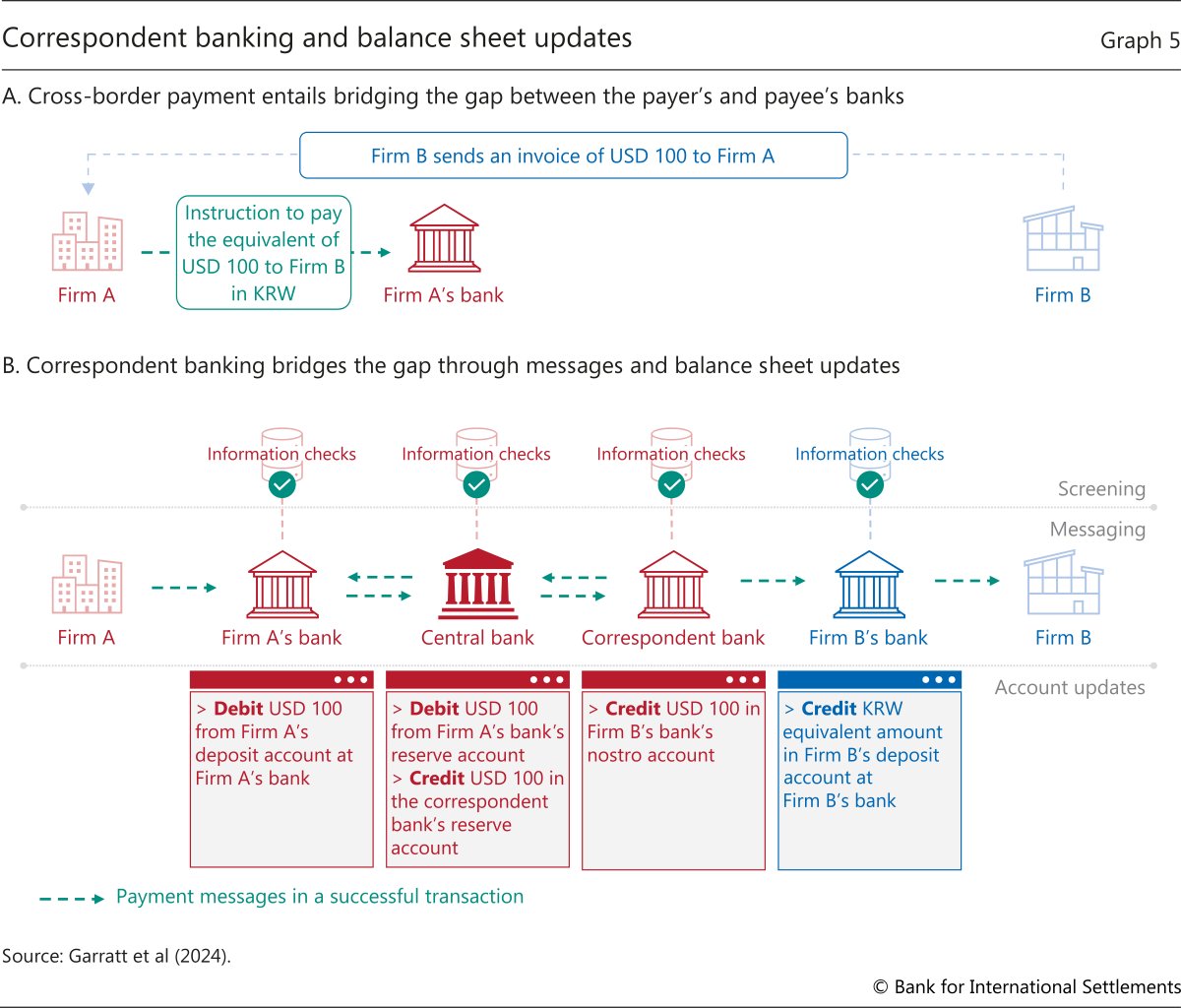
Organizations typically implement compliance workflows that integrate identity verification (KYC/AML) directly into the governance smart contract interface. This process ensures that only verified participants can mint or transfer voting tokens, or cast votes on-chain. The following steps outline the standard compliance architecture used by enterprises deploying on-chain governance.
Before deploying any smart contracts, legal counsel must define the jurisdiction and the legal wrapper for the tokenized security. This involves determining whether the tokens represent direct equity, profit-sharing rights, or voting proxies under local corporate law. The SEC and other regulatory bodies require clear disclosure of these rights in the offering memorandum. Failure to align the token’s economic rights with the legal wrapper can result in the token being classified as an unregistered security.
Compliance workflows require the integration of a KYC/AML provider into the governance platform. This third-party service verifies the real-world identity of users before they are allowed to interact with the voting contract. The smart contract must check for a valid verification status, often stored as a non-transferable NFT or a zero-knowledge proof, before allowing vote casting. This step ensures that the on-chain vote is cast by a legally recognized person, satisfying anti-money laundering (AML) requirements.
To maintain securities compliance, the underlying token contract must enforce transfer restrictions. These restrictions prevent tokens from being sold to non-accredited investors or entities in prohibited jurisdictions. The contract should include functions that block transfers unless the recipient has passed KYC checks. This ensures that the voting power remains within the bounds of the original securities offering, preventing unauthorized redistribution of corporate control.
Prior to launch, both the smart contract code and the legal documentation must undergo rigorous auditing. Technical auditors check for vulnerabilities that could allow unauthorized voting or token manipulation. Legal auditors review the tokenomics and governance rules against securities regulations in all target jurisdictions. This dual audit process is essential for mitigating liability and ensuring that the on-chain governance mechanism does not inadvertently violate corporate law.
-
Legal review of token structure and jurisdiction
-
Smart contract audit by a reputable firm
-
Integration of KYC/AML identity verification
-
Investor accreditation status confirmed on-chain
-
Regulatory disclosure documents published and accessible
The intersection of blockchain technology and corporate law requires a hybrid approach. While the smart contract executes the vote, the legal wrapper provides the enforceability. Organizations must treat compliance not as an afterthought, but as a core component of the governance architecture. As regulatory frameworks evolve, these workflows will likely become more standardized, but the fundamental requirement for legal alignment remains constant.
No comments yet. Be the first to share your thoughts!