The 2026 governance landscape
The era of treating DAOs as pure decentralization experiments has ended. By 2026, resilient organizations have adopted hybrid models blending traditional corporate governance rigor with blockchain efficiency. This shift is a necessary evolution to manage real-world assets and complex regulatory environments, moving beyond abstract ideals to practical execution.
The primary driver of this change is participation. Data indicates that DAOs are centralizing, not decentralizing, as pure on-chain voting suffers from low engagement. Decades of corporate governance research explain this pattern: without structured incentives and clear accountability, power naturally concentrates among active stakeholders. The new model acknowledges this reality, using on-chain tools for execution while relying on off-chain frameworks for legitimacy.
This hybrid approach integrates traditional governance mechanisms with digital transparency. For example, many DAOs now employ delegated voting structures similar to proxy voting in public markets, allowing experts to cast votes on behalf of passive token holders. This reduces the noise of low-turnout votes while maintaining the auditability of the blockchain. The result is a system that is both efficient and accountable, capable of managing high-stakes financial assets without the paralysis of constant referendums.
The integration of real-world assets further necessitates this structural maturity. Managing physical assets like real estate or commodities requires legal clarity and fiduciary responsibility that pure code cannot provide. Consequently, successful DAOs in 2026 operate with dual-layer governance: smart contracts handle the automated execution of agreements, while traditional legal wrappers provide the necessary human oversight and dispute resolution. This separation of concerns allows DAOs to participate in global markets without sacrificing the security and transparency that blockchain technology offers.

Tokenizing Real-World Assets
DAOs are moving beyond crypto-native tokens to govern physical and financial real-world assets. This shift requires new legal structures and voting frameworks that can handle tangible value. Governance is no longer just about managing code; it is about managing ownership of buildings, commodities, and private equity.
The integration of these assets into DAOs bridges the gap between decentralized communities and traditional finance. When a DAO holds a commercial property or a pool of treasury bills, the governance mechanics must change. Votes now determine asset maintenance, lease agreements, and distribution of yields. This requires a higher degree of legal accountability than simple token transfers.
Legal wrappers like Delaware LLCs or Swiss foundations are now standard for these DAOs. These entities provide the legal personality needed to hold title to physical assets. The DAO’s smart contracts interact with these legal entities through designated treasurers or automated oracles. This hybrid model ensures that on-chain votes have off-chain legal force.
Voting mechanisms often incorporate reputation-weighted systems. Unlike simple one-token-one-vote, these models weigh the expertise of members in areas like real estate management or compliance. Delegated voting is also common, where specialized committees handle day-to-day asset decisions. This partial centralization improves efficiency while maintaining community oversight.
AI-Assisted Voting Mechanisms
DAOs are deploying artificial intelligence to bridge the gap between complex proposal data and voter comprehension. As highlighted by the Harvard Law School Forum on Corporate Governance, AI adoption is a central theme in 2026 governance trends, shifting from experimental tools to essential infrastructure for managing information asymmetry.
AI models now parse technical specifications in real-time, summarizing dense proposal documents into digestible insights. This reduces the cognitive load on token holders, allowing them to vote with greater confidence rather than abstaining due to complexity. By aggregating sentiment from on-chain history and off-chain discussions, these systems identify nuanced voter preferences that simple yes/no ballots often miss.
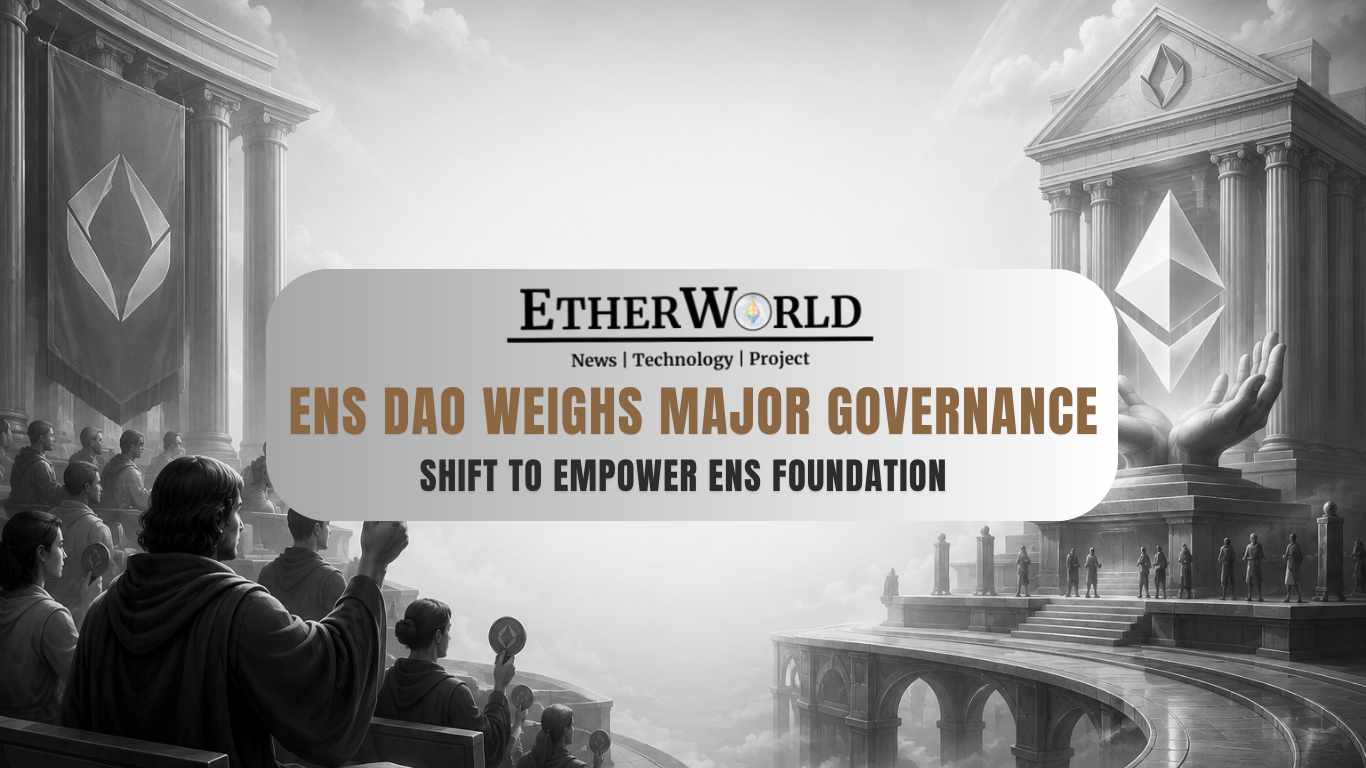
This shift is particularly critical for DAOs managing real-world assets, where regulatory compliance and financial risk require precise scrutiny. For example, the ENS DAO’s recent consideration of governance shifts toward the Foundation demonstrates the need for clearer, AI-augmented communication channels to ensure members understand the implications of centralized operational changes.
Integrating these tools creates a more informed electorate. Instead of relying on a small group of active delegates, the DAO can harness the collective intelligence of its broader membership, leading to higher participation rates and more robust decision-making processes.
Navigating centralization risks
Despite their founding promise of distributed power, many DAOs are quietly centralizing. As the sector matures, a paradox has emerged: the more complex a DAO becomes, the more governance tends to concentrate in the hands of a few active participants. This isn't necessarily a failure of code, but a reflection of human behavior. Corporate governance research explains why participation stays low and power consolidates without structured incentives.
This trend is particularly visible in DAOs managing real-world assets. When digital tokens represent physical property or private credit, the stakes of governance rise. Decisions about default rates, legal compliance, or asset liquidation require specialized knowledge that most token holders don't possess or time to acquire. Consequently, voting power often drifts toward a small group of institutional advisors or founding teams who can navigate these high-stakes financial mechanics.
To mitigate whale dominance, 2026 trends are shifting toward delegated voting and quadratic mechanisms. Instead of forcing every holder to vote on every proposal, DAOs are experimenting with systems where votes carry different weights based on conviction or expertise. This doesn't eliminate centralization entirely, but it makes it more transparent and accountable. The goal is no longer perfect decentralization, but a governance structure that can withstand the complexities of real-world finance without collapsing under the weight of apathy.
The challenge for DAOs is balancing efficiency with inclusivity. If only a few experts vote, the DAO risks becoming a closed club. If everyone votes, decisions stall. The emerging solution lies in hybrid models that combine automated execution for routine tasks with human oversight for critical financial decisions, ensuring that power remains a tool for the community rather than a privilege for the few.
Legal Convergence and Entity Status
The era of DAOs operating in legal gray zones is ending. In 2026, the dominant trend is the formal recognition of DAOs as legal entities, granting them the capacity to enter binding contracts, hold intellectual property, and own real-world assets. This shift moves governance from purely on-chain code to a hybrid model where smart contracts interact with traditional legal frameworks.
This convergence is critical for DAOs managing real-world assets. When a DAO owns physical assets—such as real estate, commodities, or revenue streams—it requires a legal vehicle to enforce ownership rights in courts. Without entity status, a DAO is merely a collection of wallets, leaving contributors personally liable and assets legally ambiguous. By adopting structures like Wyoming’s DAO LLCs or the Swiss DAO Foundation, protocols can isolate risk and integrate seamlessly with traditional finance.
Official sources like the European Centre for Law and Justice and the Harvard Law School Blockchain Club highlight that legal recognition is no longer optional for high-stakes operations. It enables DAOs to issue bonds, secure loans, and participate in regulated markets. This legal clarity transforms DAOs from experimental communities into institutional-grade participants in the global economy, bridging the gap between decentralized governance and centralized legal enforcement.
Frequently asked: what to check next
How do real-world assets change DAO voting?
Integrating real-world assets like treasury bills or real estate shifts DAO governance from speculative tokenomics to traditional fiduciary duties. Governance becomes less about community sentiment and more about legal compliance. For example, a DAO holding tokenized US Treasuries must vote in ways that satisfy SEC regulations, not just token holders. This requires stricter voting thresholds and often limits participation to verified institutional actors.
Why are DAOs centralizing despite decentralization goals?
New 2026 data indicates that DAOs are centralizing, not decentralizing. Corporate governance research explains that low participation rates allow a small group of large token holders to dominate decisions. This mirrors traditional corporate structures where a few shareholders control the board. The result is a governance model that is efficient but lacks the broad democratic participation initially promised.
What role does AI play in DAO governance today?
AI is moving from advisory roles to active voting mechanisms. AI agents can now analyze proposal impacts and cast votes based on pre-set parameters, reducing human bias. However, this raises questions about accountability. If an AI agent votes incorrectly, who is liable? Governance frameworks are currently struggling to define legal responsibility for algorithmic decisions in high-stakes financial contexts.
No comments yet. Be the first to share your thoughts!