
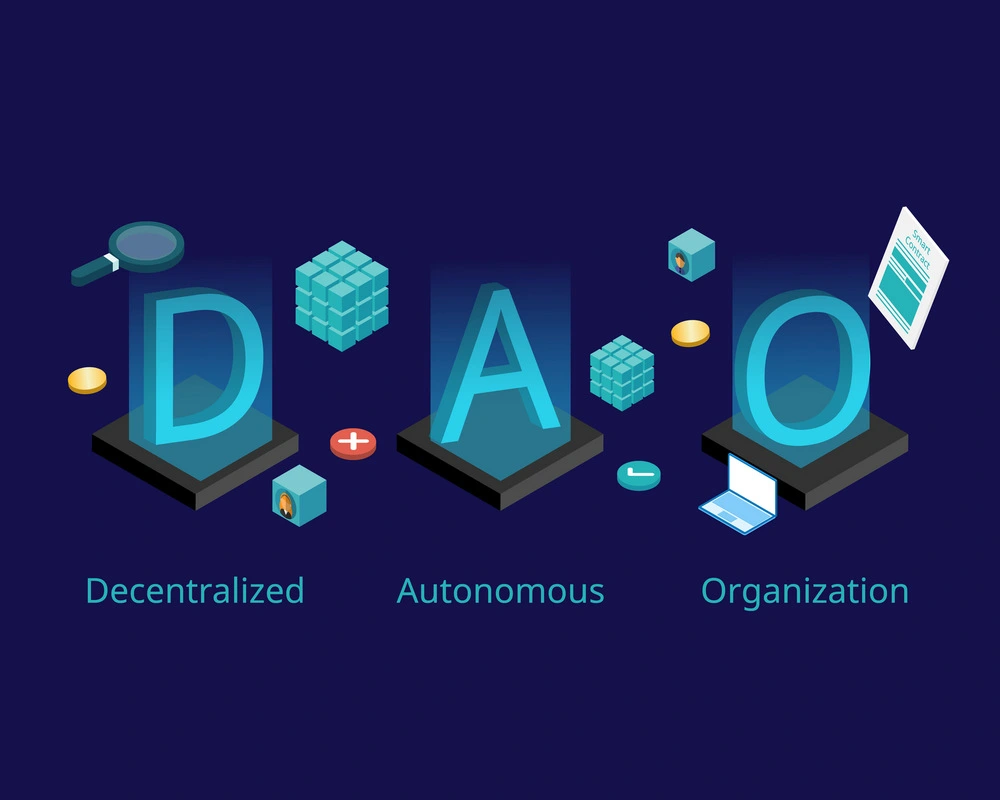
Dao governance 2026
The promise of DAO governance has always been equal voice, but 2026 data shows a different reality. Corporate governance research now explains why participation stays low and power concentrates in the hands of a few. DAOs are centralizing, not decentralizing, as the complexity of on-chain voting creates friction that only the most engaged (or wealthy) members can navigate.
This shift is driven by the limitations of traditional governance tokens. While tokens convey privileges like fee distribution rights, they often lead to "whale" dominance where a small number of holders control outcomes. This dynamic mirrors traditional corporate boardrooms, undermining the egalitarian ethos of the web3 movement.
Soulbound Governance Tokens (SGTs) are emerging as a corrective mechanism. Unlike transferable tokens, SGTs are non-transferable credentials tied to a wallet’s identity. They allow protocols to weight votes by expertise, tenure, or contribution rather than pure capital. This approach aims to reduce the influence of speculative traders and align governance with long-term community health.
The transition is not seamless. Implementing SGTs requires new technical infrastructure and careful design to avoid creating new forms of exclusion. However, for DAOs seeking sustainable growth, moving beyond simple token-weighted voting is no longer optional. It is a necessary evolution to balance efficiency with genuine decentralization.
Dao governance 2026 choices that change the plan
Evaluating DAO governance structures in 2026 requires looking past the promise of pure decentralization. Recent data shows a trend toward centralization, driven by the practical need for efficiency and the reality of low voter participation. When assessing a DAO, you must weigh the tradeoffs between token-weighted influence, which can lead to whale dominance, and soulbound tokens, which prioritize reputation but may stifle liquidity and exit options.
The following comparison breaks down the core factors you should evaluate when analyzing governance models. These metrics highlight the tension between theoretical decentralization and operational reality.
Token-weighted systems remain the most common, but they face criticism for allowing wealthy entities to dictate outcomes. Soulbound tokens address this by tying governance rights to specific actions or identity, yet they introduce complexity in verifying "work" and preventing gaming. Hybrid models, like those seen in Gitcoin DAO, attempt to balance these by using quadratic voting or reputation multipliers to dampen whale influence while maintaining some liquidity.
For investors and participants, the key is to check the actual on-chain data. Look at the distribution of voting power and the frequency of active proposals. A DAO with high token concentration may offer stability but lacks true decentralization. Conversely, a purely reputation-based system may be resilient but slow to adapt. The future of DAOs lies in finding the right balance for their specific use case, whether that is treasury management or protocol upgrades.
How to evaluate a soulbound governance token
Soulbound tokens (SBTs) are non-transferable credentials that verify identity, reputation, or contribution history without speculative value. Unlike standard governance tokens, which can be bought and sold to influence votes, SBTs anchor voting power to verified participation. This shift addresses the "whale problem" in traditional DAOs, where large token holders can dominate decisions regardless of their actual commitment to the protocol.
Evaluating a DAO that uses SBTs requires looking at the verification layer. Who validates the "soul"? Is it a decentralized oracle network, a known identity provider, or a community-curated registry? The trust model here is critical. If the verification is centralized, the DAO has effectively replaced token-based centralization with identity-based centralization. Look for transparent criteria on how SBTs are issued and whether they can be revoked for malicious activity.
Next, assess the voting mechanics. Do SBTs grant equal voting weight, or is there a quadratic voting system to amplify smaller voices? Some DAOs use SBTs to create "delegated" voting rights, where users can delegate their non-transferable vote to trusted experts without selling their influence. This structure encourages expertise over capital, but it requires robust mechanisms to prevent the emergence of a new, unaccountable elite.
Finally, consider the exit strategy. Since SBTs cannot be sold, their value is purely functional within the ecosystem. If the DAO fails or the protocol becomes inactive, the SBT becomes a digital paperweight. Ensure the DAO has a clear treasury management plan and a path to sustainability that doesn't rely on token speculation. A healthy DAO balances on-chain governance with real-world utility, ensuring that participation yields tangible benefits beyond voting rights.
Spotting the weak options
Not all DAO governance structures hold up under scrutiny. Many projects market "soulbound" or non-transferable tokens as a fix for voter apathy, but the reality is often more complex. Recent data from 2026 indicates that many DAOs are centralizing, not decentralizing, as corporate governance research explains why participation stays low and power concentrates among a few large holders [src-1].
When evaluating a DAO, look for these common mistakes:
- Token concentration: If a small group holds the majority of voting power, decentralization is an illusion. Check on-chain data to see if a few wallets control most votes.
- Low participation rates: High voter turnout is rare. Look for mechanisms that incentivize participation, such as quadratic voting or delegation, rather than assuming every token holder is active.
- Vague proposals: Good governance relies on clear, actionable proposals. If proposals are ambiguous or lack detailed implementation plans, the DAO is likely struggling with decision-making.
Soulbound governance tokens aim to address these issues by tying voting rights to identity or reputation rather than wealth. However, they are not a silver bullet. They can create barriers to entry and reduce liquidity, which may hinder the DAO's growth. As the future of DAOs evolves, the focus is shifting toward social and economic transformation, emphasizing inclusivity and collective decision-making [src-4].
To make informed decisions, review the DAO's governance charter and on-chain activity. Look for transparency in how proposals are created and voted on. If a DAO lacks clear metrics or hides its voting data, it may be a weak option. Remember, governance is not just about technology; it is about people and how they collaborate.
Dao governance 2026: what to check next
Readers often ask how soulbound tokens change the game. Unlike standard tokens, soulbound governance tokens cannot be sold or transferred. This locks voting power to verified identities or long-term participation, aiming to reduce "whale" dominance and sybil attacks. It shifts power from capital to reputation.
Does XRP have a DAO?
Yes. The XAO DAO operates on the XRP Ledger as a decentralized autonomous organization. It uses the ledger's native capabilities to manage community funds and coordinate governance without a central entity, demonstrating how established blockchains can host DAO structures.
What is DAO governance?
DAO governance is the system by which members of a decentralized organization make decisions. Instead of a board of directors, proposals are voted on by token holders or soulbound members. Rules are encoded in smart contracts, ensuring that if a proposal passes, the treasury or protocol changes execute automatically.
Are governance tokens a good investment?
Governance tokens are speculative assets, not guaranteed dividends. While some protocols distribute fees to token holders, many rely solely on the hope that the platform will grow. The value depends entirely on the project's utility and adoption. Treat them as high-risk equity in a protocol, not as stable income.
What is the future of the DAOs?
The future of DAOs is shifting from pure decentralization to hybrid models. Research shows a trend toward centralization for efficiency, with soulbound tokens adding a layer of accountability. We expect more "legal wrappers" that allow DAOs to own assets in the real world while maintaining on-chain transparency.
No comments yet. Be the first to share your thoughts!