
The 2026 governance shift
The NFT market entered 2026 already in a downtrend, having failed to reverse the decline that began in 2025. Across major chains, trading activity shrank as speculative interest evaporated. Projects that relied on hype and floor-price appreciation found themselves stranded with no liquidity and no community engagement. In this contracted market, the only surviving assets are those that offer tangible utility.
Governance utility has emerged as the primary survival mechanism for NFT projects. Speculation-driven collections are fading, replaced by assets that grant real access, ownership rights, or revenue participation. Users now expect their digital holdings to function as keys to value, not just digital art to trade. This shift has elevated the governance NFT 2026 model from a niche experiment to the standard for sustainable project economics.
The contrast is stark: speculative trading is dying, while utility-driven governance assets are gaining traction as the only viable path forward for long-term project viability.
Legacy DAOs, which often struggled with low participation and bureaucratic inefficiency, are being replaced by on-chain voting systems that are more transparent and accessible. These new governance structures allow token holders to vote directly on treasury allocations, protocol upgrades, and community initiatives. The result is a more engaged community that feels a direct stake in the project's success, rather than just a passive holder of a speculative asset.
This transition is not just about survival; it is about building a more resilient and democratic ecosystem. By prioritizing governance utility, NFT projects can create lasting value that transcends market cycles. The era of the "pump and dump" is over, replaced by a focus on sustainable growth and community-driven decision-making.
How Governance NFTs Power On-Chain Voting
Governance NFTs in 2026 function as non-transferable voting power tokens, anchoring decision-making directly to on-chain identity rather than mere capital allocation. Unlike traditional token-weighted systems where wealth dictates influence, or snapshot-based DAOs that rely on off-chain signatures, governance NFTs embed voting rights into the protocol's core logic. This shift ensures that every vote is verifiable, immutable, and executed without the latency or fraud risks associated with external polling services.
The mechanism replaces the "one token, one vote" model with a more nuanced approach where the NFT itself represents a verified stake or identity. When a proposal is submitted, the smart contract checks for the presence of the specific governance NFT in the voter's wallet. If present, the vote is cast and recorded on-chain immediately. This eliminates the need for gas-intensive signature collection and prevents sybil attacks that plague snapshot-based voting, where multiple wallets can be controlled by a single entity.
This on-chain integration also allows for dynamic voting weights. As seen in ecosystems like Algorand, governance NFTs can evolve over time, adjusting their influence based on participation history or staking duration. Projects like Hone leverage these improvements to ensure that liquidity flows into decisions made by active, verified participants rather than passive holders. The result is a governance layer that is both more secure and more responsive to the community's actual engagement.
Governance NFT 2026: How Voting Models Compare
The shift toward on-chain governance is not just a technical upgrade; it is a structural reset of how digital communities allocate power. By 2026, the distinction between holding a governance NFT and holding a traditional governance token has become the primary filter for evaluating DAO legitimacy. This comparison breaks down the mechanics, costs, and trade-offs of three dominant voting models: governance NFTs, token-weighted DAOs, and off-chain snapshot systems.
The Mechanics of Influence
Governance NFTs tie voting rights to unique digital assets. This model prevents vote-selling and sybil attacks because each NFT represents a distinct, non-fungible identity or stake. The primary advantage is accountability; voting power cannot be diluted by buying more tokens on the open market. However, this creates a "plutocracy of rarity," where early adopters or wealthy collectors hold disproportionate influence compared to newer participants.
Token-Weighted DAOs rely on fungible tokens (ERC-20). Voting power scales directly with the number of tokens held. This model is highly liquid and easy to understand, but it is vulnerable to whale dominance. A single entity can accumulate enough tokens to sway outcomes, often leading to centralization risks. The gas costs for voting are typically lower than NFTs, but the risk of market manipulation is higher.
Snapshot Voting is an off-chain mechanism that records votes at a specific block height without executing transactions on-chain. It is virtually gas-free and allows for frequent, low-stakes polls. The trade-off is transparency and immutability; since votes are not recorded on-chain, they can be harder to audit independently, and the final execution still requires on-chain transactions, creating a two-step process.
Transparency and Cost Trade-offs
Transparency is the core differentiator. Governance NFTs offer the highest on-chain verifiability, as every vote is tied to a unique token ID that can be traced back to a wallet. Token-weighted systems are transparent but noisy, with high volumes of transactions that can obscure significant voting events. Snapshot systems are the least transparent by default, relying on external indexing services to record and display vote tallies.
Cost is another critical factor. Governance NFT voting requires on-chain transactions, incurring gas fees that can be prohibitive during network congestion. Token-weighted voting also incurs gas fees, though they are often lower due to simpler contract interactions. Snapshot voting eliminates gas fees for the voting act itself, making it the most accessible model for large communities with low capital.
Side-by-Side Comparison
The table below summarizes the key differences between these governance models. The choice depends on the specific needs of the DAO: security and uniqueness versus liquidity and cost-efficiency.
| Model | Transparency | Decentralization | Gas Cost | Sybil Resistance |
|---|---|---|---|---|
| Governance NFT | High | Medium | High | High |
| Token-Weighted DAO | High | Low | Medium | Low |
| Snapshot Voting | Medium | High | None | Medium |
Choosing the Right Model
For high-stakes decisions involving significant treasury management, governance NFTs provide the strongest security and accountability. The unique nature of the NFT ensures that each vote represents a distinct, verifiable stake. For communities prioritizing accessibility and frequent engagement, snapshot voting offers a low-friction entry point, though it requires careful integration with on-chain execution.
Token-weighted DAOs remain the standard for liquid assets and DeFi protocols where voting power should mirror economic exposure. However, the risk of whale dominance is a persistent challenge. Many modern DAOs are adopting hybrid models, using governance NFTs for core governance and snapshots for preliminary polling, balancing security with usability.
The landscape is evolving rapidly. As Layer 2 solutions reduce gas costs, the barrier to on-chain voting is lowering, making governance NFTs more viable for broader communities. The key is to align the voting model with the DAO's specific goals, whether that is security, liquidity, or community engagement.
Market Impact and Adoption
The shift toward on-chain voting is no longer a niche experiment; it is reshaping capital allocation in the digital asset space. Venture capital firms are actively targeting projects that embed governance directly into their tokenomics, viewing these structures as more resilient and transparent than legacy DAO models. This trend signals a maturation of the market, where utility and ownership are becoming indistinguishable.
VC interest in this sector has surged, with recent data indicating a 44% growth in funding for NFT projects that prioritize governance utility over speculative art. Investors are prioritizing protocols that offer real-world utility, such as access to exclusive financial products or decentralized service networks. This capital influx is driving a consolidation of value, moving away from pure speculation toward sustainable, utility-driven ecosystems.
| Feature | Legacy DAO | Governance NFT 2026 |
|---|---|---|
| Voting Mechanism | Off-chain snapshots, prone to Sybil attacks | On-chain, wallet-based, transparent |
| VC Attractiveness | Lower due to governance fragmentation | Higher due to clear ownership and utility |
| Adoption Trend | Stagnating | Rapidly expanding with 44% VC growth |
The financial implications are visible in the performance of governance-focused assets. As projects integrate on-chain voting, their tokens often exhibit stronger correlation with broader market trends, reflecting increased institutional confidence. This stability is attracting a new class of long-term holders who value the structural integrity of on-chain governance.
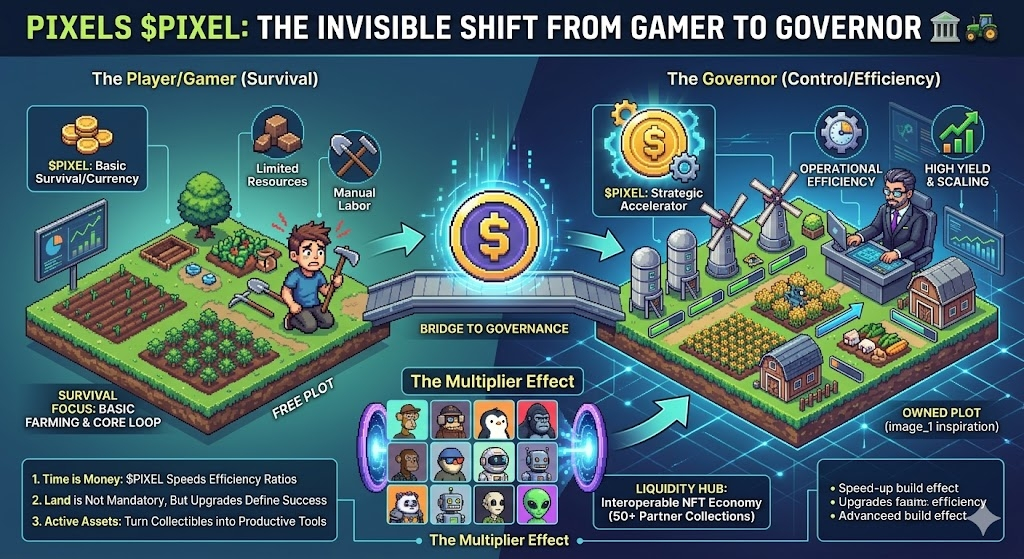
To understand the market dynamics, it is useful to observe the price action of major governance tokens. The following chart illustrates the volatility and growth patterns associated with leading governance-focused projects, highlighting the strong correlation between governance utility and market value.
No comments yet. Be the first to share your thoughts!