
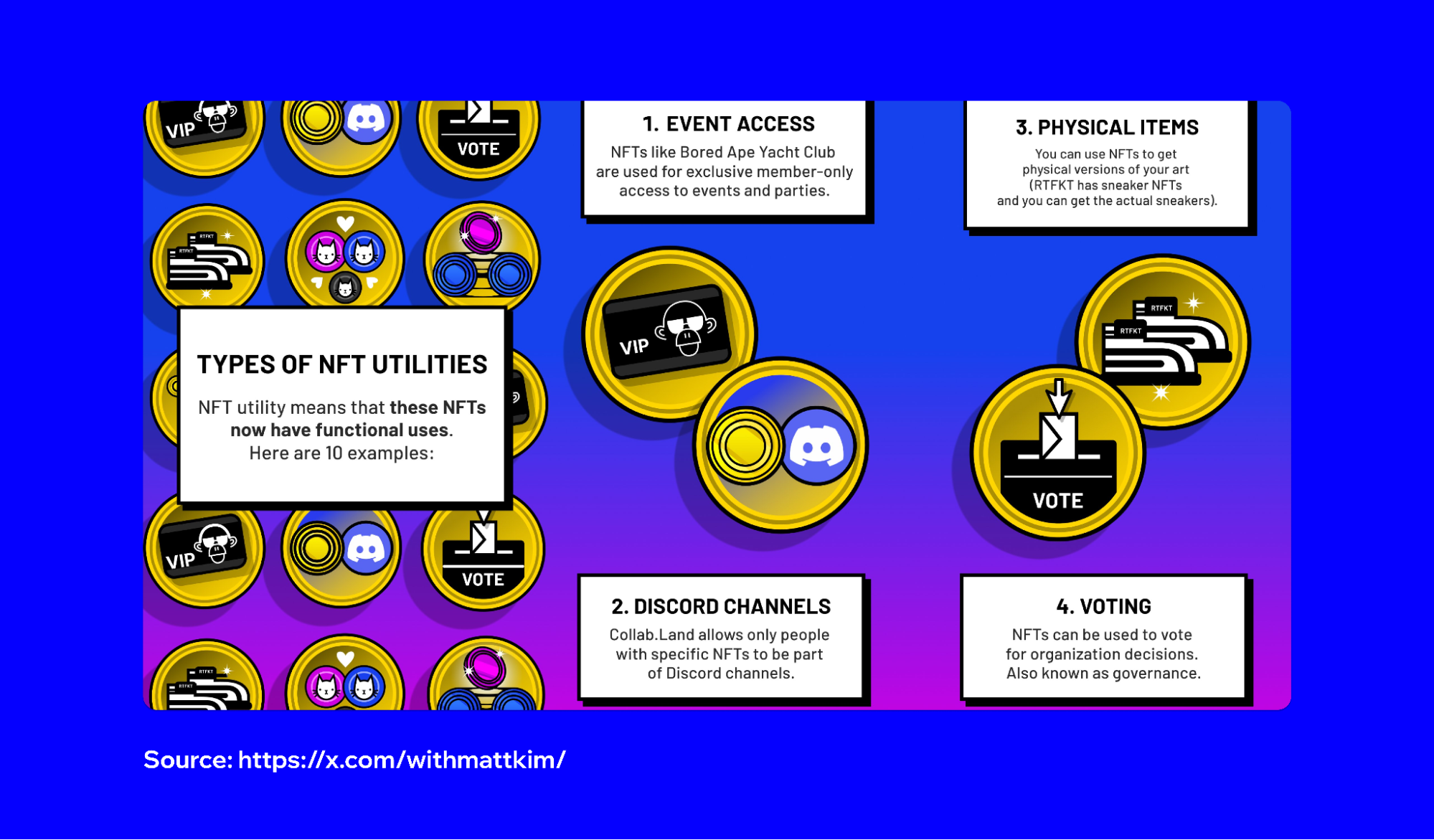
From speculation to utility
The NFT market entered 2025 in a sustained downtrend, failing to reverse course across major chains as trading activity shrank significantly. This contraction marks a structural pivot away from the speculative fervor of previous cycles. By 2026, the remaining value in the sector is anchored not in secondary market flips, but in functional utility—specifically governance rights and on-chain identity. This shift establishes the foundational context for why governance NFTs have become a critical component of organizational compliance.
The decline of pure speculation has cleared the noise, allowing projects with tangible utility to define the market. While high-profile collections like CryptoPunks and Bored Ape Yacht Club maintain brand recognition, the economic rationale for holding these assets has changed. The focus has moved toward how these tokens function as keys to participation in decentralized autonomous organizations. This transition aligns with emerging regulatory frameworks that prioritize verifiable identity and transparent voting mechanisms over anonymous trading volume.
To understand the current stability of this sector, it is helpful to examine the price action of established governance tokens. Unlike the volatile spikes seen in speculative PFP markets, governance assets often track more closely with underlying protocol usage and regulatory adherence.
This move toward utility is not merely aesthetic; it is a response to increasing scrutiny. Regulatory bodies are increasingly looking at on-chain voting records as evidence of compliant organizational structure. Governance NFTs, therefore, serve a dual purpose: they grant voting power while simultaneously acting as a verifiable record of membership and intent. This duality makes them essential for organizations seeking legitimacy in a tightening regulatory landscape.
Soulbound tokens for decentralized identity
Soulbound tokens (SBTs) are emerging as the structural foundation for verified participant identity in decentralized autonomous organizations. Unlike standard non-fungible tokens, these digital credentials are non-transferable, binding a specific identity to on-chain history without exposing private keys or revealing the full scope of a wallet’s financial activity. This architectural shift addresses a critical compliance gap: how to prove eligibility and reputation while maintaining privacy.
The utility of SBTs extends beyond speculative collectibles. As the market matures, users expect real utility, including access rights and identity verification, rather than mere ownership of digital art. By tethering governance rights to a persistent, non-sellable identity, organizations can implement more robust Know Your Customer (KYC) frameworks. This ensures that voting power is distributed among verified humans rather than sybil attackers or aggregated capital.
This approach supports a legal/regulatory framework where accountability is traceable but privacy is preserved. The non-transferable nature of these tokens prevents the secondary market from commodifying voting rights, a practice that often draws regulatory scrutiny. As 2026 governance models solidify, SBTs will likely serve as the standard for proving legitimacy in high-stakes organizational decisions.

On-chain voting mechanisms explained
On-chain voting transforms governance from a suggestion into an executable protocol state. Unlike off-chain snapshots, which rely on external oracles to tally signatures, on-chain voting records every vote directly on the blockchain ledger. This ensures that the voting power associated with governance NFTs is immutable and verifiable by any node in the network.
The technical implementation typically involves smart contracts that lock governance NFTs during the voting period. This prevents double-spending of voting power and ensures that the distribution of influence remains tied to the specific NFT attributes defined by the organization. The result is a transparent audit trail where every vote is public, permanent, and resistant to tampering.
Transparency is the primary compliance advantage. Regulatory bodies and legal auditors can inspect the full history of proposals and votes without relying on third-party reporting. This level of scrutiny is essential for high-stakes governance structures where accountability is a legal requirement rather than a best practice.
While off-chain methods offer lower gas costs, they lack the finality of on-chain execution. On-chain voting eliminates the need for trusted intermediaries to validate results, reducing the risk of disputes over tallying errors or manipulated data. For organizations operating under strict regulatory frameworks, this immutability provides the necessary foundation for legal defensibility.
DAO compliance standards in 2026
The regulatory environment for decentralized autonomous organizations has shifted from ambiguous enforcement to structured compliance frameworks. In 2026, the primary legal risk for DAOs is the inability to prove the identity of their participants. Traditional on-chain voting, which relies on anonymous wallet addresses, no longer satisfies anti-money laundering (AML) and know-your-customer (KYC) requirements imposed by financial regulators in major jurisdictions.
Governance NFTs address this gap by serving as verifiable on-chain credentials. Unlike fungible tokens that can be traded anonymously, governance NFTs can be programmatically linked to verified legal identities. This linkage allows DAOs to enforce compliance rules directly in their smart contracts, ensuring that only vetted participants can vote or access treasury funds. This structure provides the legal transparency required for institutional adoption and regulatory scrutiny.
The following comparison highlights the structural differences between legacy governance models and the compliant standards adopted in 2026.
Real-World Governance NFT Examples
The Algorand ecosystem demonstrates how governance NFTs function as functional compliance instruments rather than speculative assets. Pera Wallet’s governance NFTs serve as verifiable on-chain credentials that grant voting rights within the Algorand decentralized autonomous organization structure.
This model prioritizes structural utility over market speculation. By tying voting power to specific NFT holdings, the network ensures that governance participation reflects actual stakeholder alignment rather than mere token volume. The system undergoes periodic updates to refine liquidity flows and voting mechanisms, as seen in recent governance periods.
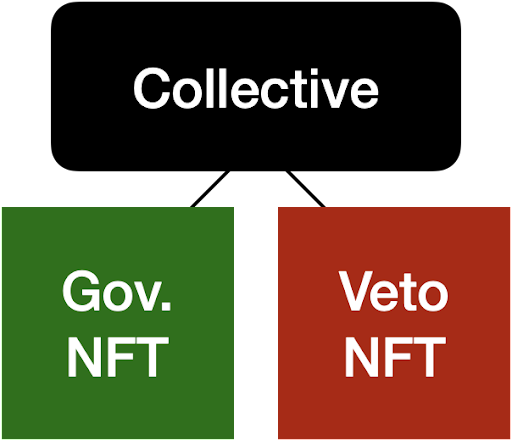
The visual representation of such DAO structures highlights the shift from informal community management to formalized, on-chain governance frameworks.
No comments yet. Be the first to share your thoughts!