Why governance NFTs matter now
The landscape of decentralized governance is undergoing a structural reset. For years, the standard model relied on fungible governance tokens, where voting power was directly proportional to capital accumulation. This "one token, one vote" approach concentrated influence in the hands of large holders, often referred to as whales, and created significant centralization risks within Decentralized Autonomous Organizations (DAOs). As regulatory scrutiny intensifies in 2026, this model is proving increasingly vulnerable to legal challenges and community backlash.
The legal implications of this shift are profound. Under current interpretations by the U.S. Securities and Exchange Commission (SEC), the classification of governance assets hinges on whether they meet the legal definition of a security. If a governance token is deemed a security, its distribution and trading are subject to strict federal regulations. By moving toward non-fungible governance rights, DAOs can argue for a different legal categorization, one that emphasizes participation and community identity rather than investment contracts.
This transition is critical for the longevity of decentralized projects. As seen in the evolving stance of regulatory bodies, the ability to demonstrate broad, distributed participation is becoming a key factor in compliance. Governance NFTs offer a pathway to align on-chain mechanics with off-chain legal realities, reducing the risk of centralized control and enhancing the resilience of DAOs against regulatory crackdowns.
How NFT Voting Rights Work
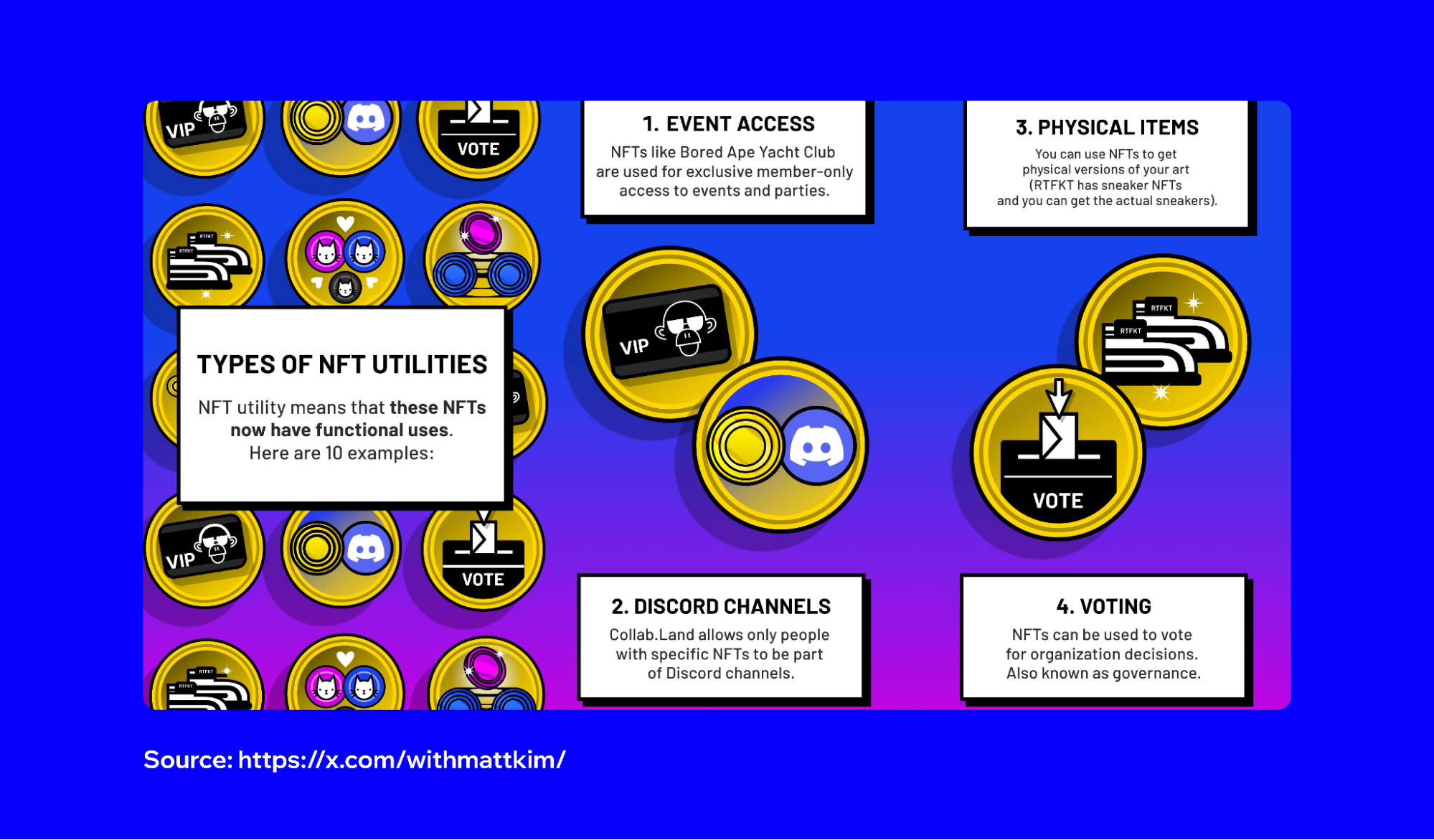
Standard governance models rely on fungible tokens, where voting power scales directly with the quantity of tokens held. This structure often concentrates influence among large holders, creating a plutocratic dynamic that can marginalize smaller participants. In contrast, governance NFTs introduce a non-fungible framework where each token represents a unique role, tier, or permission set rather than just proportional voting weight. This shift moves the paradigm from "one token, one vote" to "one NFT, one vote," decoupling voting rights from financial capital accumulation.
The mechanics of NFT-driven governance are defined by the distinct attributes embedded within each token. While ERC-20 tokens are interchangeable, an NFT’s value lies in its specific metadata: a particular seat on a council, a veto right, or access to a specialized committee. This allows DAOs to implement sophisticated governance structures where different roles carry different levels of authority, ensuring that decision-making reflects expertise and commitment rather than just market capitalization.
| Feature | Fungible Governance Tokens (ERC-20) | Governance NFTs (ERC-721/1155) |
|---|---|---|
| Voting Power | Proportional to token balance | Fixed per NFT (1:1) or role-based |
| Transferability | High; liquidity concentrates power | Low; often soulbound or restricted |
| Regulatory View | Often classified as securities | Treated as access keys or utility |
| Governance Model | Plutocratic (wealth-weighted) | Meritocratic or Democratic |
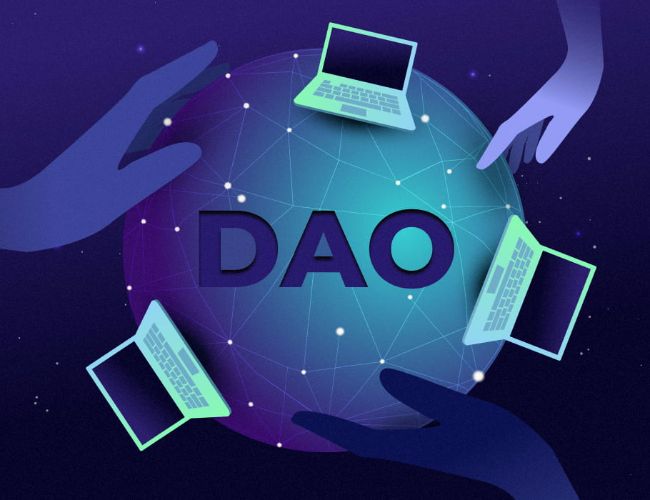
This distinction has significant regulatory implications. Because NFTs do not represent fractional ownership in the same way fungible tokens might, they are less likely to be classified as investment contracts under frameworks like the Howey Test. Instead, they are increasingly viewed as access keys or utility instruments, providing a clearer legal pathway for decentralized organizations to operate without triggering securities laws. The image below illustrates the evolving landscape of DAO voting, highlighting the shift toward identity-based participation.
Real-world governance NFT examples
Governance NFTs are moving from experimental concepts to operational infrastructure. Unlike fungible governance tokens, these non-fungible tokens serve as verifiable, non-transferable (or semi-transferable) credentials that anchor voting rights to specific wallet histories or staking commitments. This shift reduces the risk of vote-buying and sybil attacks, which have historically plagued DAO structures reliant on liquid tokens.
Algorand’s Pera Wallet Governance Periods
The Pera Wallet on Algorand has institutionalized this model through its periodic governance cycles. During each Governance Period, eligible users stake ALGO to participate in protocol decisions. As a tangible record of this participation and tiered commitment, Pera distributes limited-edition NFTs to participants. The specific artwork or tier of the NFT corresponds to the amount of ALGO staked, creating a verifiable on-chain history of governance engagement [src-serp-2].
These NFTs function primarily as proof-of-participation badges rather than liquid voting instruments. Community discussions indicate that while their immediate market value may be modest, they represent a "badge of honor" and a permanent record of stewardship [src-serp-1]. This structure aligns incentives by rewarding long-term commitment over speculative flipping, a common failure mode in token-based governance.
Market Context and Asset Performance
The value of governance NFTs is inextricably linked to the underlying protocol’s health. For Algorand-based governance, the price of ALGO serves as the primary indicator of network activity and staking demand. Understanding the current valuation of the underlying asset is essential for assessing the real-world cost of participation.
The integration of NFTs into this staking mechanism adds a layer of identity to the economic stake. It transforms governance from a purely financial transaction into a verifiable identity action, a trend likely to expand as regulatory scrutiny on DAOs increases.
Regulatory scrutiny and the securities question
The intersection of governance NFTs and the Securities and Exchange Commission (SEC) represents the most significant legal risk for decentralized autonomous organizations (DAOs) today. The core tension lies in how regulators classify these digital assets. If the SEC determines that a governance NFT functions as an investment contract, it falls under strict federal securities laws, fundamentally altering how DAOs operate and interact with their holders.
The primary legal test hinges on whether the NFT meets the definition of a security. This classification is not automatic; it depends on the specific rights attached to the token. If the NFT is merely a membership pass with no expectation of profit derived from the efforts of others, it may avoid securities regulation. However, if the NFT grants voting rights that directly influence the financial value of the project or promises returns based on the team’s development efforts, the SEC is likely to view it as a security.
This distinction carries high-stakes implications. Projects deemed to be issuing unregistered securities face immediate enforcement actions, including fines, mandatory registration, or forced shutdowns. For DAOs, this means that the design of their governance mechanisms must be meticulously crafted to ensure they do not inadvertently trigger securities law protections. The legal environment is shifting rapidly, and proactive compliance is no longer optional for serious projects.
To understand the market’s reaction to this regulatory uncertainty, it is useful to look at the volatility of major governance tokens. The following chart illustrates the price action of Uniswap (UNI), a leading governance token, which has experienced significant fluctuations partly due to broader regulatory fears in the crypto space.
Future trends in decentralized governance
The trajectory of governance NFTs in 2026 points toward a structural shift from simple token-weighted voting to identity-based verification. This evolution addresses critical legal liabilities by anchoring voting rights to verifiable human identity rather than anonymous wallet addresses. By integrating Decentralized Identifiers (DIDs), projects can implement Know Your Customer (KYC) protocols directly into the governance layer, ensuring compliance with evolving regulatory frameworks.
Simultaneously, voting mechanisms are becoming more sophisticated to mitigate plutocracy and sybil attacks. Quadratic voting and delegation models are gaining traction, allowing participants to express preference intensity while reducing the influence of large holders. This approach aligns with the original ethos of DAOs while providing the transparency required for institutional adoption.
As these systems mature, the distinction between digital assets and legal personhood will blur. Governance will no longer be a binary right attached to a token, but a nuanced permission set verified through zero-knowledge proofs. This shift ensures that decentralized organizations can operate within legal boundaries without sacrificing the core principles of autonomy and transparency.
No comments yet. Be the first to share your thoughts!