
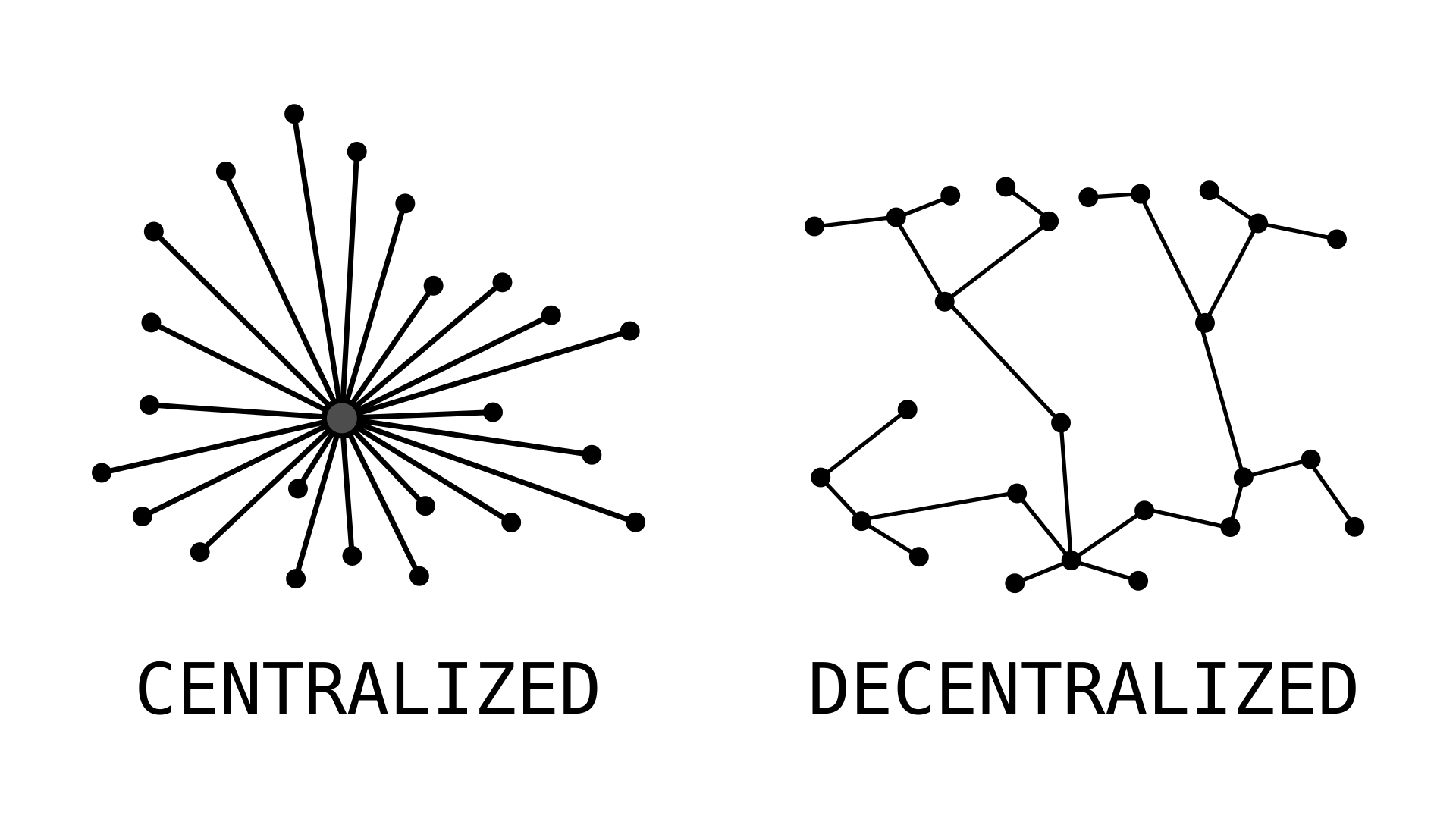
Governance NFTs Drive Policy
The landscape of non-fungible tokens has shifted from speculative trading to functional utility. By 2026, governance NFTs serve as verifiable on-chain credentials that grant holders voting rights and policy influence within decentralized protocols. This transition marks a structural change in how digital communities are governed, moving away from hype-driven valuations toward mechanisms that align ownership with regulatory compliance and operational control.
Mechanism Design and Compliance
Governance NFTs function similarly to membership cards or shares, but with programmable enforcement. Unlike fungible tokens, these non-fungible assets are often tied to specific identities or contribution histories, ensuring that voting power is distributed according to predefined legal or community standards. This structure allows organizations to implement Know Your Customer (KYC) requirements directly into the smart contract layer, reducing the risk of sybil attacks and ensuring that policy decisions reflect the interests of verified participants.
The integration of real-world utility further solidifies their role. Projects now link digital ownership to tangible benefits, such as access to exclusive services or revenue-sharing models. This shift demands rigorous auditing of the underlying code to ensure that the governance mechanisms are transparent and resistant to manipulation. As these systems mature, the focus is on creating robust frameworks that can withstand regulatory scrutiny while maintaining the decentralization that defines the space.
Market Maturity and Adoption
The fading of speculation-driven models has paved the way for more sustainable governance structures. Current market trends indicate that users expect real utility, such as identity verification or in-game value, rather than pure asset appreciation. This demand for functionality has led to the emergence of governance-focused collections that prioritize long-term stability over short-term price action.
To understand the current state of these markets, it is useful to observe the broader digital asset landscape. The following chart illustrates the volume and holder concentration trends for governance-focused NFT collections, highlighting the maturation of the sector.
Compare governance voting models
On-chain governance NFTs utilize distinct distribution mechanisms to allocate voting power. The structural design of these mechanisms directly impacts regulatory compliance, particularly concerning anti-money laundering (AML) standards and the legal classification of the underlying assets. Understanding the trade-offs between one-NFT-one-vote, soulbound tokens, and delegation is essential for evaluating the security and legitimacy of decentralized autonomous organizations (DAOs).
The following comparison outlines the operational characteristics of the primary governance models. This analysis focuses on voting power distribution, resistance to Sybil attacks, and the impact on asset liquidity, which are critical factors in legal risk assessment.
| Model | Voting Power | Sybil Resistance | Liquidity Impact |
|---|---|---|---|
| One-NFT-One-Vote | Holding-based | Low | High (tradable) |
| Soulbound (SBT) | Identity-based | High | Zero (non-transferable) |
| Delegation | Vote-weighted | Medium | Variable |
One-NFT-One-Vote structures grant voting rights proportional to NFT holdings. While this model supports high liquidity, it creates significant regulatory exposure by allowing vote buying and concentration of power among wealthy holders. This structure often mirrors traditional shareholding models, potentially triggering securities law implications in certain jurisdictions.
Soulbound tokens (SBTs) are non-transferable digital credentials that anchor voting power to verified identity. This mechanism offers superior Sybil resistance by preventing the accumulation of votes through market manipulation. However, the immutability of these tokens restricts liquidity, which may conflict with investor exit strategies and property rights frameworks.
Delegation models allow NFT holders to assign their voting weight to third-party representatives. This approach balances liquidity with governance efficiency but introduces counterparty risk. The legal accountability of delegated votes remains an evolving area of regulatory scrutiny, particularly regarding fiduciary duties and transparency requirements.
Regulatory risks and compliance
The issuance and utility of governance NFTs now intersect directly with securities laws, creating a high-stakes legal environment for developers and holders alike. As regulatory bodies move from enforcement theatre to infrastructure design, the legal foundation for on-chain voting remains unfinished but increasingly stringent [src-serp-7]. Projects that previously relied on speculative value are now expected to demonstrate real utility, such as access rights or identity verification, to navigate these compliance hurdles [src-serp-4].
Local compliance requirements further complicate the deployment of decentralized governance. Jurisdictions vary widely in how they treat digital assets, with some requiring Know Your Customer (KYC) checks for token holders and others imposing strict limits on cross-border voting participation. Failure to integrate these local mandates into the smart contract layer can result in the freezing of assets or legal action against the protocol creators.
Governance NFTs as Identity and Access Tools
The utility of governance NFTs is shifting from speculative assets to functional identity verification and access keys. This evolution moves the sector beyond simple on-chain voting toward broader ecosystem participation. Users now expect verifiable ownership rights that link digital tokens to real-world benefits, regulatory compliance, and structured governance rights.
This transition addresses the limitations of anonymous participation. By embedding identity verification into the NFT standard, projects can ensure that governance power aligns with verified stakeholders. This structure supports legal compliance frameworks, particularly in jurisdictions requiring identity protocols for financial or policy decisions.
The shift reflects a broader market correction. As noted in industry analysis, speculation-driven NFTs are fading, replaced by platforms that offer tangible utility and verified access. This structural change positions governance NFTs as essential infrastructure for regulated decentralized organizations.
Key questions on governance NFTs
Governance NFTs differ fundamentally from speculative collectibles. Their value derives from on-chain voting rights and protocol influence rather than brand equity or physical utility. While general market queries often cite CryptoPunks or Bored Ape Yacht Club as top investments, these assets lack the regulatory structure required for decentralized governance. The following analysis addresses the specific legal and functional distinctions relevant to 2026 compliance frameworks.
How do governance NFTs differ from standard NFTs?
Standard NFTs primarily function as proof of ownership or access keys. Governance NFTs serve as voting tokens within decentralized autonomous organizations (DAOs). Holding the NFT grants the right to propose or vote on protocol upgrades, treasury allocation, and parameter adjustments. This structural shift moves the asset from a passive store of value to an active instrument of policy. Regulatory scrutiny focuses on whether these voting rights constitute an investment contract under securities laws.
Are governance NFTs subject to securities regulations?
Compliance depends on the Howey Test interpretation in your jurisdiction. If the NFT’s value is derived primarily from the efforts of a central team or DAO council, it may be classified as a security. Projects like Algorand’s Pera Governance NFTs attempt to mitigate this by distributing voting power broadly across ecosystem participants. However, legal certainty remains low. Investors must verify if the token distribution and voting mechanics align with local securities exemptions. Always consult official regulatory guidance before participation.
Can I trade governance NFTs for profit?
Trading is technically possible on secondary markets, but liquidity is significantly lower than for speculative NFTs. The primary utility is voting, not resale. Price volatility is often driven by protocol announcements rather than market sentiment. Using provider-backed widgets is essential for accurate, real-time data, as static price lists become obsolete quickly. For current market context, refer to live chart data for relevant governance tokens.
No comments yet. Be the first to share your thoughts!