What is a governance NFT?
A governance NFT is a non-fungible token that represents a specific voting right or governance role within a decentralized autonomous organization (DAO). Unlike fungible governance tokens, where ownership is measured by the quantity of tokens held, governance NFTs often operate on a "one NFT = one vote" model. This structure decouples voting power from financial wealth, aiming to prevent whale dominance and encourage more equitable participation in protocol decisions.
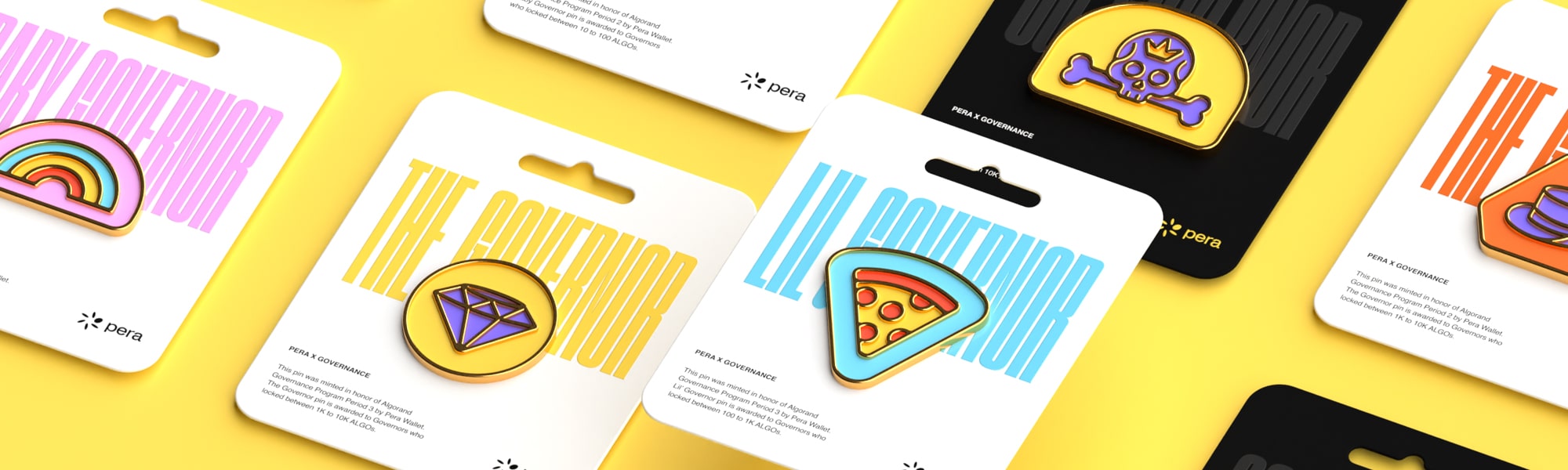
These tokens function as digital badges of membership or authority. For example, in the Algorand ecosystem, projects like Pera Wallet distribute limited-edition governance NFTs to users based on their staking activity. These NFTs serve as claimable credentials that grant access to specific governance periods, effectively turning staked assets into active voting rights [1]. The unique artwork and tiered access associated with these NFTs create a tangible sense of ownership and community status that simple token balances cannot replicate.
The core distinction lies in fungibility. Standard governance tokens are interchangeable; one token is identical to another. A governance NFT is unique and non-divisible. This uniqueness allows DAOs to assign different types of voting power or access levels to different NFTs, such as granting veto rights to core contributors or limiting voting frequency to prevent spam. By using NFTs, protocols can implement complex governance structures that are transparent, verifiable, and resistant to centralization.
Why 1 NFT equals 1 vote matters
Traditional DAO voting often mirrors corporate shareholder structures, where wealth dictates influence. In these systems, quadratic voting or token-weighted models allow entities with large holdings to dominate decision-making, effectively silencing smaller participants. This concentration of power undermines the decentralization that DAOs promise, turning governance into a plutocracy rather than a community effort.
NFT-driven governance flips this dynamic by decoupling voting power from capital. As defined by Delphi Digital, this model uses non-fungible tokens to represent governance rights, enforcing a strict one-NFT-equals-one-vote rule. This ensures that every participant, regardless of their financial stake in the protocol, has an equal say in the network's future.
This shift mitigates the risk of whale manipulation and encourages active participation. When voting power is tied to a unique, non-transferable (or soulbound) identity rather than a fungible asset, it becomes harder for bad actors to buy up voting rights. The result is a more resilient governance structure where decisions reflect the collective will of the community rather than the deepest pockets.
Real examples of governance NFTs
Governance NFTs move beyond theoretical models by integrating directly into active blockchain networks. Unlike traditional voting systems that rely on centralized databases, these non-fungible tokens serve as verifiable, on-chain credentials for participation. Two prominent examples illustrate how this technology functions in practice: the Algorand ecosystem's staking-based rewards and Optimism's experimental token distribution framework.
Algorand: Staking as a Badge of Honor
On the Algorand network, governance NFTs function as both a functional voting tool and a commemorative badge. Users can claim these limited-edition assets through the Pera Wallet governance portal, with the specific artwork tier determined by the amount of ALGO staked during designated Governance Periods [[src-serp-1]].
This model ties voting power and community identity directly to economic commitment. As noted by the community, while the immediate market value of these NFTs may be low, they represent a "badge of honor" for active participants [[src-serp-2]]. This approach contrasts with pure token-weighted voting, emphasizing long-term stakeholder alignment over short-term speculation. The program is part of a broader shift in Algorand's incentive structure, moving toward reimagined staking rewards and xGov mechanisms [[src-serp-3]].
Optimism: GOVNFT for Vesting
Optimism has taken a more experimental approach with its GOVNFT framework. Rather than just representing voting rights, these NFTs are designed for the vesting and distribution of governance tokens [[src-serp-5]]. This method allows for precise, time-locked distribution of power within the Optimism Collective, ensuring that governance rights are released according to predefined schedules rather than all at once.
This model highlights a key advantage of NFT-driven governance: programmability. While Algorand uses NFTs to recognize stake, Optimism uses them to manage the flow of influence. This distinction shows that governance NFTs are not a monolithic standard but a flexible toolkit for DAOs seeking to balance decentralization with structured growth.
Beyond the ballot: broader utility of governance NFTs
While the primary function of a governance NFT is to grant voting rights within a decentralized autonomous organization, its utility rarely stops at the ballot box. These assets often serve as digital keys to exclusive communities, proof of long-term commitment, or even mechanisms for token distribution. Understanding this broader scope helps explain why holders treat these NFTs as strategic assets rather than simple transactional tools.
Community access and status
Holding a governance NFT frequently acts as a membership pass to high-value networks. Projects use these non-fungible tokens to gatekeep Discord channels, private forums, or real-world events, ensuring that participants have a tangible stake in the protocol’s success. This "badge of honor" dynamic, observed in ecosystems like Algorand’s Pera Governance NFTs, creates social capital alongside voting power. The NFT becomes a verifiable credential that signals dedication, fostering tighter-knit communities where governance discussions are more engaged and informed.
Vesting and token distribution
Some protocols leverage governance NFTs to manage complex economic incentives, particularly through vesting schedules. Instead of distributing tokens all at once, projects can mint NFTs that unlock rewards over time. For example, the GOVNFT standard allows for the minting of NFTs specifically designed to vest and distribute governance tokens, funded by communities like the Optimism Collective. This approach aligns long-term incentives, reducing the risk of immediate sell-offs and encouraging holders to participate in the ecosystem’s growth over months or years.
Potential for value appreciation
The financial value of a governance NFT is tied to its utility and the health of the underlying DAO. While some early iterations may have had minimal market value, the potential for appreciation exists if the NFT grants access to profitable opportunities or if the DAO itself generates significant revenue. As governance models evolve, secondary markets for these assets may develop, allowing holders to trade their voting rights or community status. However, this value is speculative and directly correlated to the project’s ability to deliver on its governance promises.
Frequently asked: what to check next
What is an NFT blockchain?
Non-fungible tokens (NFTs) are cryptographic assets that live on a blockchain, which is a distributed public ledger recording transactions. Each NFT contains unique identification codes that distinguish it from every other token. This unique data structure makes it easy to transfer ownership and verify that a specific governance NFT belongs to a specific wallet.
How does an NFT protocol token work?
While some projects use native tokens for governance, others rely on a dedicated protocol token to manage liquidity and utility. For example, the NFT Protocol Token ($NFT) is a utility token designed to establish decentralized liquidity for non-fungible digital assets. In governance contexts, holding these tokens or the associated NFTs often determines voting power or access to protocol rewards.
What is NFT-driven governance?
NFT-driven governance is a model where non-fungible tokens represent governance rights within a DAO, replacing the traditional "one token, one vote" system with "one NFT, one vote." This approach ensures that each participant has equal voting weight regardless of how many tokens they hold, aiming to reduce the influence of large whale holders. This structure is central to how modern governance NFTs function compared to traditional DAOs.
No comments yet. Be the first to share your thoughts!