
Defining AI governance NFTs
AI governance NFTs represent a convergence of autonomous AI agents and decentralized voting mechanisms. Unlike standard utility or art NFTs, which typically store static metadata or grant access to services, these tokens encode the logic parameters of an intelligent agent. The primary distinction lies in the dynamic nature of the asset: token holders do not just own a digital collectible, but exercise influence over how the AI behaves, learns, or evolves.
Decentralized governance mechanisms specific to intelligent NFTs allow token holders to vote on AI behavior parameters, learning objectives, or evolutionary paths. This structure transforms the NFT from a passive record into an active control interface. The intersection of AI, blockchain, and law creates a novel legal category where code functions as both property and regulatory instrument. This model shifts traditional ownership concepts, as control is distributed among a decentralized community rather than held by a single entity.
Existing intellectual property and securities laws are being stretched to accommodate these hybrid assets. While case law remains sparse, the enforceability of on-chain governance votes will likely be a central point of contention. As these systems mature, the distinction between the token (the governance vehicle) and the AI (the governed entity) will likely become the primary focus of legal scrutiny.
Who owns the IP when the NFT dictates output?
The intersection of generative AI and blockchain introduces a novel legal ambiguity: when a non-fungible token (NFT) encodes the parameters, prompts, or behavior of an AI model, who holds the intellectual property rights to the resulting work? Traditional copyright frameworks rely on identifying a human author, but smart contracts automate the creative process, potentially decoupling human intent from legal ownership.
Mere ownership of a governance token does not automatically confer copyright in the AI-generated output. Courts in major jurisdictions, including the United States and the European Union, have consistently held that works created without human authorship are not copyrightable. If the NFT merely serves as a key to access an AI tool, the token holder likely has no claim to the IP. However, if the token’s smart contract contains specific licensing logic or revenue-sharing mechanisms tied to the output, the legal landscape shifts toward contract law rather than copyright law.
This distinction is critical for compliance. Jurisdictions are beginning to scrutinize the "human-in-the-loop" requirement more strictly. If an NFT’s code fully automates the creative decisions, the resulting asset may fall into the public domain, regardless of who holds the token. Conversely, if the token represents a license to use a specific dataset or model, the IP rights remain with the dataset owner or the AI developer, not the token holder.
The uncertainty is compounded by the lack of case law specifically addressing AI-driven NFTs. The primary risk lies in the assumption that token ownership equals asset ownership. This assumption is legally fragile. Compliance strategies must therefore focus on the explicit terms of the smart contract and the jurisdictional rules governing AI-generated content, rather than relying on the inherent value of the token itself. Until clearer precedents emerge, the safest legal position is that the IP remains with the original human creators or the entity that trained the model, not the holder of the governance token.
DAO liability and smart contract enforcement
The intersection of decentralized autonomous organizations (DAOs) and AI agents creates a complex liability landscape. When an AI agent, minted as an NFT, executes actions autonomously, determining who is legally responsible becomes difficult. Traditional corporate structures rely on clear hierarchies, but DAOs distribute decision-making across token holders. This structure complicates the assignment of fault when an AI agent causes harm or breaches a contract.
Regulators are struggling to fit these hybrid entities into existing frameworks. If an AI agent managed by a DAO generates copyrighted material or causes financial loss, the DAO itself may not have the legal personhood required to be sued. Instead, liability could potentially fall on the individual developers or token holders, depending on their level of involvement and control. This uncertainty discourages institutional adoption and raises questions about enforcement.
Smart contracts attempt to mitigate some risks by automating compliance and royalty enforcement. For instance, code can be written to ensure that an AI agent only operates within predefined legal boundaries or that royalties are automatically distributed to creators. However, code is not law. If the underlying AI model behaves unpredictably or if the smart contract contains vulnerabilities, the automated enforcement may fail. Courts have not yet established clear precedents for enforcing smart contracts in the context of AI-generated damages.
There is a need for clearer guidelines. Jurisdictions are beginning to examine how DAOs can be registered or recognized to accept liability. Until then, entities managing AI agents through DAOs face significant legal exposure. The lack of case law means that participants are operating in a gray area, where the consequences of AI-driven actions are not fully defined by statute or precedent.
Regulatory scrutiny and cross-border issues
The convergence of artificial intelligence and blockchain technology has moved from a technical curiosity to a focal point for national security regulators. As AI tokens and non-fungible tokens (NFTs) increasingly rely on decentralized infrastructure, governments are applying existing national security frameworks to these novel assets. This regulatory tightening creates a complex compliance landscape for developers and holders alike.
In the United States, the Committee on Foreign Investment in the United States (CFIUS) has expanded its purview to include emerging technologies. Recent analysis suggests that AI and blockchain systems central to the metaverse and NFT ecosystems are among the most targeted technologies for CFIUS review. This scrutiny extends beyond traditional foreign investment, capturing transactions that involve access to sensitive AI models or decentralized identity protocols.
Across the Atlantic, the European Union is advancing comprehensive frameworks that directly impact digital asset governance. The EU AI Act and the Markets in Crypto-Assets (MiCA) regulation impose strict transparency and risk-management requirements. While these laws aim to protect consumers and ensure market integrity, they also create significant compliance burdens for projects operating across borders. The lack of harmonized global standards means that a compliant AI-NFT project in one jurisdiction may face legal uncertainty in another.
Enforcement will likely focus on the intersection of data privacy, intellectual property, and national security. Projects must anticipate that regulators will view AI-driven NFTs not just as digital collectibles, but as potential vectors for data extraction or illicit finance. Staying ahead of these shifts requires continuous monitoring of official guidance from agencies like CFIUS and the European Commission.
Compliance checklist for governance tokens
Legal teams assessing AI governance NFTs must evaluate the intersection of blockchain mechanics and intellectual property rights. Tokenized datasets and AI agents introduce novel ownership questions, particularly regarding provenance and licensing rules embedded in smart contracts [src-serp-1]. Current frameworks struggle to define authorship for AI-generated content, creating uncertainty around the underlying assets these tokens represent [src-serp-3].
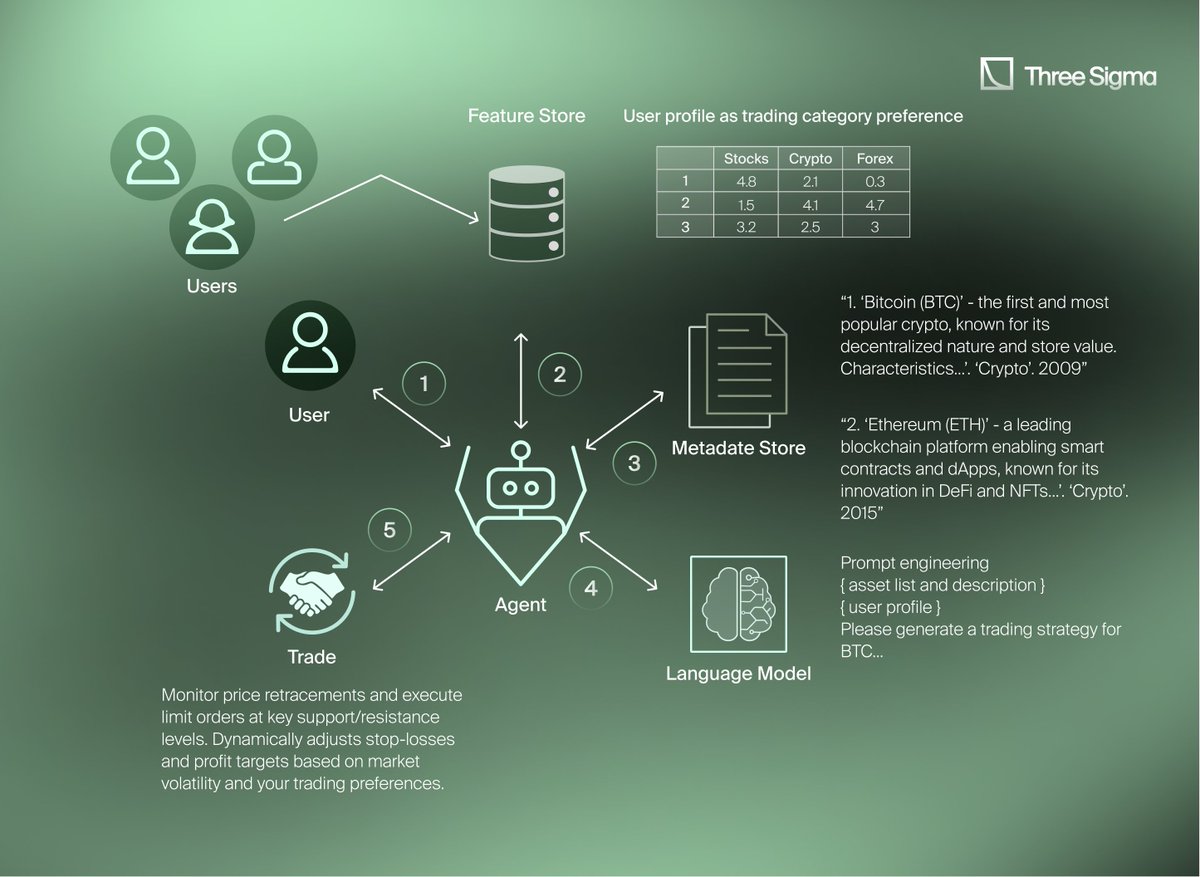
Due diligence should focus on how governance rights interact with autonomous AI behaviors. Decentralized mechanisms often allow token holders to vote on AI learning objectives or evolutionary parameters, raising liability concerns if the agent’s output infringes on third-party rights [src-serp-5]. Projects must clarify whether governance tokens confer economic rights or merely voting power, as this distinction impacts securities and trademark compliance [src-serp-6].
Checklist
-
Verify IP ownership of underlying AI models and training data
-
Assess liability allocation for autonomous AI agent actions
-
Review smart contract logic for revenue-sharing and licensing
-
Evaluate jurisdictional risks for decentralized governance votes
-
Confirm trademark protection for brand-associated AI identities
Common questions about ai governance nfts
As the intersection of artificial intelligence and blockchain matures, legal frameworks are struggling to keep pace with technical innovation. The following analysis addresses high-intent queries regarding the legal status, intellectual property rights, and operational liabilities inherent in AI governance NFTs.
No comments yet. Be the first to share your thoughts!